Between the Trees Farm
Your Emotional Health is Impacting Your Body
Have you ever had a physical ailment that you couldn’t get to the bottom of? Even though you eat well and try to eliminate toxins, there’s still something destructive in your body?
The definition of “holistic medicine” is the treatment of the whole person, taking into account mental, emotional, and social factors, in addition to the physical symptoms of an illness.

Hilary and Melissa as kids.
Several years ago, I had the weirdest symptoms. I couldn’t breathe into my abdomen. My breaths were shallow and tight. It relaxed somewhat as I slept, but progressively throughout each day my diaphragm got tighter and tighter to the point that I was often gasping for breath by night. Sometimes my hands would begin to clench uncontrollably into what I called “raptor claws” and I would feel pins and needles in my face. It severely impacted my physical well being.
I was doing everything I could to be healthy in my daily habits. Although I had suffered poor health due to eating junk food as a kid, by this time my body had healed from a leaky gut and other challenges caused by bad food. My lifestyle is about as free from toxins as any modern American can be. I had begun fasting which helps the body accomplish deep healing. I worked with a gifted naturopath, extraordinary acupuncturist and an amazing chiropractor. But still, this strange tight breathing persisted. I couldn’t figure out what was causing it or how to get rid of it.
There had been a toxic relationship in my life that was constantly boiling under the surface. I had done my best to transform my festering emotions into positive thoughts, but no degree of mental effort could dissolve my frustration. I couldn’t stop looping on negative thoughts.
Thankfully my sister Melissa is a licensed therapist, she has an adjacent non-licensed healing practice as well, and she recognized that I needed help working through my negative emotions. She worked with me, helping me to give voice to the trauma that I had experienced and allowing me to put my hurt parts to rest.
Seemingly magically to me, the more we worked on it, the better my breathing got. When we reached the point where I no longer felt angry, I also no longer had tight breathing.
For me, this connection felt significant. Negative experiences, trapped emotions, and unhelpful thought loops have a very real impact on the body and are associated with digestive problems, headaches, and other symptoms that have no obvious cause. Not to mention, it’s hard to be happy when you can’t let go of a hurt that keeps you trapped in the past, and we all want to be happy.

Melissa kindly agreed to do a question and answer blog with me so that you can learn from her experiences helping people work through raw emotions. Maybe you’ve considered doing therapy, but felt it wasn’t the right fit for you. Or maybe you tried therapy and felt you needed something different. Melissa is a trained and licensed therapist in Texas, Colorado, and Utah and does traditional therapy, but she also offers a separate healing approach that focuses on emotional processing, self compassion, and personal transformation outside a clinical framework.
A drawing Hilary did of Melissa as a teenager.
Q: What's the difference between healing and therapy?
A: Therapy (also called counseling) is mainly focused on helping people understand and manage diagnosable mental health symptoms. Symptoms of anxiety, depression, ADHD, PTSD, and all the other mental health diagnoses are things therapists are trained to treat. Some licensed therapists also incorporate depth oriented, experiential, or spiritually informed approaches into their work, however it’s difficult to find those, and there’s not an easy way to determine who those people are. Licensure means that a person has a masters degree (sometimes a doctorate) in either psychology, counseling, family therapy, or social work, that they’ve passed a national exam, and done 3000 hours (or about two years) of work under supervision. A licensed therapist has an ethical code and a minimum standard of knowledge and conduct. They can diagnose and treat mental illness within their state, and they can bill insurance for services. Therapy is practiced within ethical and regulatory frameworks designed to promote client safety, professional accountability, and evidence based care.
“Healing” is a non-regulated term. Healers may come in the form of any type of licensed professional, including doctors, nurses, chiropractors, massage therapists, and others, or they may be non-licensed, such as Reiki practitioners, energy workers, intuitives, shamans, or others. There is no standardization to the word “healer”, so I can’t really define what it means for other people.
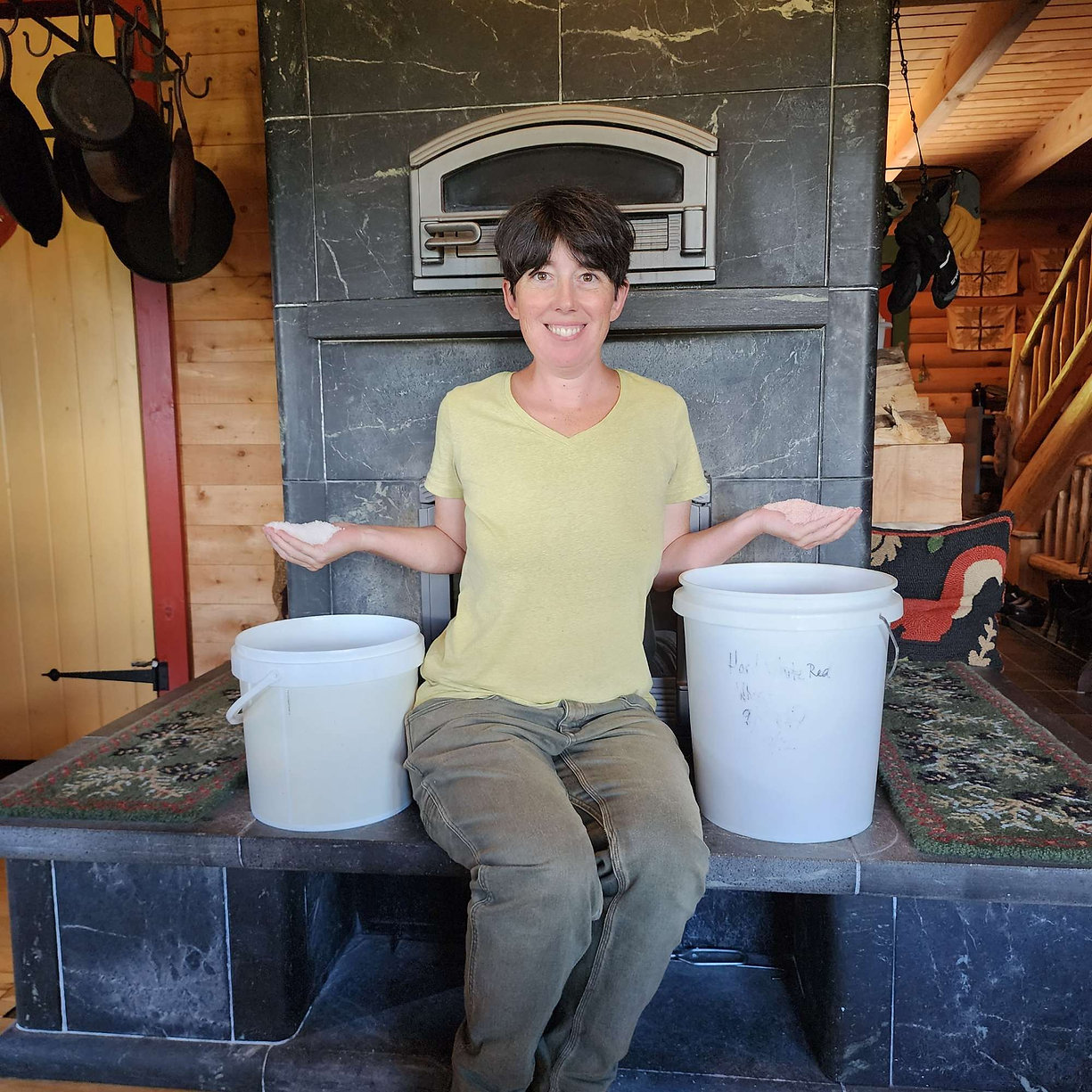
For me, healing refers to work that focuses less on diagnosis and symptom reduction and more on emotional integration, meaning-making, and personal transformation. I think of my healing work as including a spiritual component (if that aligns with the client’s belief system--and I work with clients of all different types of beliefs), and leaning more on the emotional side than the cognitive-behavioral side. I conceptualize work with most of my healing clients not as treating a diagnosis, but as “emptying rocks’ (the bad stuff) from a metaphorical bucket, and filling the metaphorical water bucket (representing self compassion, self acceptance, self love). I use mainly somatic (body) sensations and “parts work” as experiential tools rather than as formal psychotherapeutic interventions. My hope for my clients is that they are able to reach a state of being free from residual “stuff” (memories, emotions, body sensations, negative self talk), to being full of self compassion. That may seem impossible for some people, and there was a time I doubted whether it was possible for me. But many people (including myself) have found this approach helpful and meaningful.
Q: How did you become a healer?
A: Well, I thought I was a therapist. And I am a therapist, in Texas, Utah, and Colorado. But in the last few years quite a number of people said to me, “what you do is not what other therapists do. I’ve never had so much success in therapy, and I’ve seen several others!” After hearing similar reflections from several clients, I realized that the way I personally practice and conceptualize therapeutic work extends beyond the minimum standards that licensure boards are designed to regulate. So I decided that if what I was doing wasn’t what was expected (though is acceptable) under licensing boards, that I could and should expand my reach. So to maintain my ethics I created a separate LLC, website, etc., and made a separate venture.
The path that I took to get to this place goes like this: 20 years ago I myself had a very full “bucket of rocks.” I experienced depression, panic attacks, nightmares, chronic fatigue, all the stuff my therapy clients come to me with. I tried therapy and I couldn’t find a good therapist. (Like many people I had no idea how to find the right one for me.) I took some medication and it kind of helped. In 2011 I decided I needed to become a therapist myself and learn all the things I wanted to know. So I did, but I also kind of went nuts with it. I read allll the books. I read so much more than I was assigned to read. I got out of grad school and saw clients and read even more books. I did all the required continuing education trainings, and then a lot more beyond that. I read more and saw more clients and applied what I learned to myself and my clients. I have now read well over 300 books on various topics within the human sciences and adjacent subjects. I still have over 100 books left on my To Be Read list. I felt I should get trained in Reiki, and I researched how to ethically incorporate Reiki into my therapy practice. I am naturally a person who loves models and loves to mix and match models, and I learned, well, a lot of models. Dozens probably. I’m currently writing a continuing education course for clinicians on how to integrate therapy models.
All of this to say, as I became healed myself, received feedback from several clients that what I was doing “wasn’t regular therapy”, and kind of reached a maturity in my work, I realized the work I most enjoy doing does not always require a formal clinical framework. For now I am keeping my license so that my current clients who need to use their insurance can continue using it, but I’m hoping to give up my license in the next 5-10 years and focus just on healing work, without diagnostic labels.
Q: What kind of problems have you helped people with?
A: In my therapy practice, I specialize in working with complex trauma and its psychological and relational impacts. That work is grounded in established clinical frameworks and is appropriate for people seeking diagnosis-informed, regulated mental health care.
In my healing practice, I work with people who are not seeking therapy but who feel weighed down by experiences, patterns, or internal states that they want to understand and relate to differently. These may show up as persistent body sensations, emotional reactions, recurring thoughts, or long-standing habits that feel difficult to shift.
I use the metaphor of emptying a bucket of rocks and filling a bucket with water to describe this process. Rather than treating diagnoses, the focus is on helping people reduce their sense of internal burden while cultivating greater self-compassion, self-acceptance, and inner steadiness. The work is experiential and reflective, and people engage with it at their own pace and according to their goals.
Q: Can you share an example of a dramatic transformation that you saw in a client due to the work you did with them?
A: The most dramatic transformation I have seen in a client involves a 76-year-old woman. This story is shared with her permission.
Before I started working with her, she had seen nine different clinicians over the course of several decades. Some were quite helpful, some less so. One practitioner who did shamanic work had also been helpful but eventually reached a point where that work no longer felt sufficient for what she wanted to address next. That is not a criticism of shamanic work or licensed clinicians. I have great respect for both.
When I began working with this woman, she was spending most of her time in bed in her bedroom. She regularly avoided social activities and medical appointments, and if she did schedule an appointment or a social event, she often canceled at the last minute due to anxiety. She had several physical symptoms as well, but the main issue, in her words, was that she just wanted to hide all the time.
She had a significant trauma history. Some of that trauma had been reprocessed with other clinicians, but a substantial amount had remained untouched. She also had a great deal of attachment trauma that showed up in multiple forms.
Although we did not do “tarot reading”, we used tarot cards as archetypal representations. We used the cards to represent different parts of her at different ages and in different relationships, as well as to represent significant people in her life.
One card in particular, the Three of Swords, became a starting point for our work. When she looked at that card, which depicts three swords piercing a heart, she reported that she felt one sword going down her throat, one going down her back, and one in her side. We worked with those physical sensations and the associated emotions over time, until they gradually resolved. That process took several sessions.
After that, specific experiences in her life emerged that functioned as metaphorical rocks in the bucket. We worked through those using somatic and parts-based tools. We then returned to the cards representing different people and different parts of her. Each part typically took one or two sessions to work through and to empty out the associated rocks. Some experiences involved multiple parts or cards and required more time, while others resolved more quickly.
As we approached the later stages of the work, we explored whether there were still people in her life whom she was metaphorically holding hostage in her internal “dungeon,” and we worked through those relationships as well. She had several dreams during our work together that provided additional archetypal material to explore.
We have now completed over 30 sessions. She is not quite finished, but she is approaching a transition into maintenance work within the next few sessions. Initially, she chose to meet twice a week for about 15 to 20 weeks, given the severity of her symptoms and the circumstances of her life. Most people work once a week, but this pace felt appropriate for her at that time. We have since reduced sessions to once a week, and within the next month or two, we will likely reduce further.
She no longer experiences the level of social fear that once dominated her life. She is able to enjoy being around people again. She has taken care of responsibilities she had been avoiding and hiding from. She had withdrawn even from her hobbies, and she has now returned to activities she enjoys.
Her bucket of rocks was enormous, like a mountain. It is nearly empty now and very close to being fully cleared. The transformation has been dramatic. In her words, “It’s been quite a journey!!”
Q: Why do you think that trapped emotions are so hard for people to deal with on their own?
A: Our culture does not like uncomfortable feelings. We are told to “get over it”, “don’t cry”, and “suck it up.” Our parents were told this by their parents, so they didn’t know any better than to tell it to us. Because our society is so conditioned to suppress and avoid emotions, we all default to trying our best not to feel them.
There is documented research showing that unprocessed emotions lead to all kinds of mental and physical health problems, including anxiety, depression, PTSD, heart problems, high blood pressure, and much more. But people in our culture literally don’t know how to deal with their feelings. I think that for many people, the most emotionally healthy role model in our lives was Mr. Rogers. But there’s only so much one man with a PBS children’s show can do! So when people learn how to become aware of, accept, and have compassion for their emotions, it feels like a literal revelation. It is exactly the opposite of what most of us have been doing our entire lives.
(Back to Hilary speaking)
For years I tried to heal my body and my emotions on my own–which is an important first step, but it only got me so far. I have learned that people need each other. No one is an island. I am so grateful for people like my naturopath, my acupuncturist, my chiropractor, and my sister who have helped me on my healing journey to accomplish recovery that I could not do on my own.
If you have unresolved trapped emotions, don’t ignore your emotional health. It is vital to your well being, physical as well as mental. Seek assistance from someone who can help you empty your bucket of rocks and feel at peace in your heart. Your life will be happier and your body will be healthier.

If you want Melissa to help you too, you can reach her here (you don’t need to reside in a state that she is licensed in, as her healing work is non-licensed): [email protected]
940.231.2913
Facebook
Instagram